How to find a D&D group online in 2026
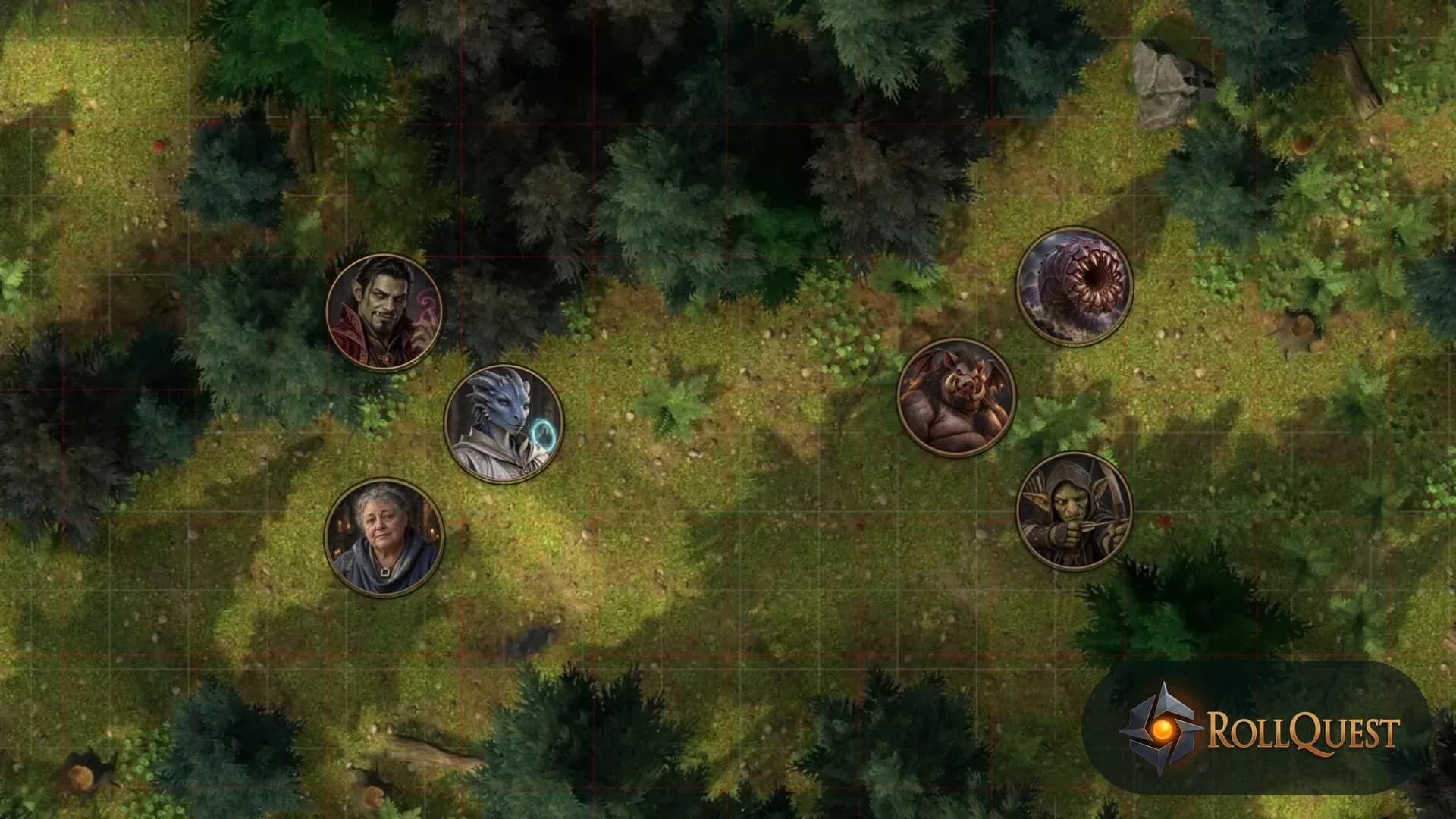
Finding the people is the hard part of D&D. Every group finder solves a piece of it. Some sell you a seat with a GM who runs games for a living, some are free boards where you post and see who answers, and some send you to a game shop on a Wednesday night. Here's where to look and what each place costs. We make RollQuest, a virtual tabletop. We don't run a group finder and none of these services is ours; the one place we come in is at the end, once you've found your group.
The short list
| Where | What a player pays | Format | Good for |
|---|---|---|---|
| StartPlaying | The GM's price, about $15 to $20 a session, plus a checkout fee | Online, a little in person | A game that happens, with a reviewed GM |
| Groupfinder | Free; optional supporter plan | Both | Being matched on how you like to play |
| D&D Beyond's group finder | Free; its paid games are StartPlaying's | Both | A first game for $0.99 while the offer lasts |
| Roll20 Looking for Group | Free; some games are paid | Online, on Roll20 only | A game tonight, if Roll20 suits you |
| r/lfg | Free; paid games go to r/lfgpremium | Both | Writing your own ad and choosing from the replies |
| Discord servers | Free | Online | One-shots at short notice |
| Warhorn | Free to players | Both | Organised play and conventions |
| Your local game store | Set by the store | In person | A regular night that turns into a home group |
| Meetup | Free to join; some groups charge dues | Both | A local group of adults |
Paid or free: decide that first
Most of the difference between these places is money. A paid GM costs $15 to $20 a session on StartPlaying, which is $60 to $80 a month for a weekly game. For that, the game happens: there's a fixed time, a GM with reviews to protect, and a refund if they don't turn up. A free board costs nothing and depends on four or five strangers keeping a weekly appointment. Plenty of long campaigns started on r/lfg. Plenty of others fizzle out by the third session.
If you've never played, a paid one-shot is a cheap way to learn from someone who teaches the game every week. If you know the rules and want a campaign with the same people for a year, the free boards are where most of those groups form.
1. StartPlaying
The biggest marketplace for paid GMs. Each GM sets a price, per session for a campaign or once for a one-shot, and StartPlaying puts the average at $15 to $20 a session. A small service fee is added on top at checkout, and the GM keeps 85% of the price after StartPlaying's 15%.
You get structure for the money. Every listing names its safety tools and content warnings. Reviews come from players who booked. A GM has to have a complete profile and at least five approved reviews to appear in GM Search. Your card is charged an hour after the session starts, and a GM who doesn't show has to refund you. If no listed game fits, the Bounty Board lets you ask for the one you want, and a separate site, Young Heroes, lists games for kids.
Three catches. Refunds come back as StartPlaying credit, not cash. Free games exist, but you still add a card at checkout. And paying a GM anywhere else, by PayPal or Venmo, breaks StartPlaying's terms, so a GM who suggests it is a GM to avoid.
Games run on any system and any virtual tabletop; the Find Games page filters by both.
Good for: a first game, or a group that keeps falling apart over scheduling. Watch for: the cost of a weekly campaign, and refunds you can only spend there.
2. Groupfinder
A free board built in Estonia. It started in 2021 for that country's D&D community and now has players in over 50 countries. Its address is groupfinder.gg: it moved there from groupfinder.eu in July 2026, and the old address redirects, so anything you've read about groupfinder.eu is about the same site.
Players post a profile, GMs post a group with open seats, and you can browse everything without signing in. Listings split into free games, paid games, playtests, play by post and West Marches, and filter by system, language, place and time. The part nobody else on this list does is matching: both sides answer a questionnaire about how they like to play, and Groupfinder scores how well they fit before anyone sends a message. Once a group forms, a Timefinder poll finds a night everyone can make, and the Group Manager holds the notes and maps.
It says it is and will stay free to use. An optional supporter plan (£5.49 a month when we checked) shows all your matches instead of two new ones a day, and lets you post more games at once. Groupfinder passed 10,000 registered users in October 2026; by its own figures, 81% of its groups play online and 59% play D&D.
Good for: a group in your own language and time zone, and anyone who would rather be matched than scroll. Watch for: a smaller pool than Reddit or Discord, so a rare system may take a while.
3. D&D Beyond's group finder
Wizards of the Coast's own page. It doesn't list games itself. It sends you three ways: the D&D Event Finder, for official events at shops near you; the official D&D Discord; and StartPlaying's professional DMs.
That last route is a partnership. The first 10,000 people to use it get a StartPlaying session for $0.99 if they're new to D&D, or $20 off a first session if they aren't. Those games are played on D&D Beyond Maps, so you'll need a D&D Beyond account.
Good for: someone who has never played and wants to try it for under a dollar. Watch for: the offer ends at 10,000 people. After that it is StartPlaying at StartPlaying's prices.
4. Roll20's Looking for Group
The oldest of the big boards, under Join a Game once you're signed in to a free Roll20 account. Filters cover the system, language, day and start time, whether new players are welcome, and an 18+ switch. Pick Up Games, the ones starting within hours, appear two hours before they begin and stay listed until half an hour after, or until they fill.
Paid games are allowed without approval, as long as they're marked as paid with the price and how often it's charged. Roll20 takes no part in the payment, so the arrangement is between you and the GM.
The rule that matters: the board is only for games played on Roll20. If Roll20 is where you want to play, that's no problem. If you want something else, use one of the other boards.
Good for: a game tonight, and players already on Roll20. Watch for: paid games settled outside any platform, with nothing to fall back on if a GM vanishes.
5. Reddit: r/lfg
The biggest free board, and the one where you do the most work yourself. You post an ad, or answer one. Titles follow a set format, starting with [Online] or [Offline] and the game, so read the subreddit's rules before you post.
r/lfg doesn't take paid games, including campaigns where only the first session is free. Those go to r/lfgpremium, with the price in the title.
Posts that say when you play, what you're running and what kind of player you want get better replies than "DM looking for players". Replies that give your availability and one line about what you enjoy do better than a long character backstory.
Good for: GMs recruiting for a campaign, and players with an unusual system or schedule. Watch for: no reviews and no vetting. Expect to message a few people before one turns into a game.
6. Discord servers
Most online groups end up talking on Discord anyway, and a few big servers exist mostly to put players and games together:
- The official D&D server, about 326,000 members. Pick your roles, then browse the Find a Game channels or use its Looking for Games bot.
- D&D Newbie Sessions, about 15,900 members, runs games for people learning to play.
- Dnd World, about 26,100 members, is one shared world played across many tables.
- Pathfinder RPG, about 35,700 members, for finding Pathfinder games.
Member counts are from each server's invite page in October 2026.
Good for: one-shots at short notice, and new players who want a patient table. Watch for: ads scroll past fast and anyone can post one. Play a one-shot with a GM before you sign up for their campaign.
7. Warhorn and organised play
Organised play is official campaigns run to shared rules, so one character can sit at any table running the same program.
D&D Adventurers League is still running. In April 2026 Wizards added D&D Play Seasons, brought back D&D Encounters (weekly play on Wednesdays) and made Legends of Greyhawk its second program. Pathfinder Society is Paizo's equivalent: you need a paizo.com account and an Organized Play number, and games are listed on Paizo's event calendar, its Online Region Discord, Meetup and Warhorn. Paizo's getting started page walks through it.
Warhorn is the sign up sheet much of this runs on: home games, store nights and conventions, with Pathfinder Society, Adventurers League and Legends of Greyhawk events on it now. The nonprofit Organized Play Foundation runs it and has pledged never to charge players.
Good for: playing most weeks without a fixed group. Watch for: adventures written for any table feel less personal than a home campaign.
8. Your local game store
Not online, but often the shortest route to a group that lasts. The Wizards Store & Event Locator has a D&D Events tab for official events at shops near you, including the Wednesday D&D Encounters nights. Play there for a few weeks and you'll know who you'd want at a home game.
Good for: playing in person, and anyone tired of scheduling across time zones. Watch for: each store runs its own nights, so check times and any table fee with the store.
9. Meetup
Meetup lists local D&D groups and their game nights. Joining a group and RSVPing is free. Some groups charge their own dues, and organisers pay Meetup a subscription. Search the D&D topic for your town.
Good for: adults who want a regular local game. Watch for: groups vary a lot. Go to one night before you commit.
How to write an LFG post that gets replies
Whichever board you use, the posts that fill put these near the top:
- The game and edition. "D&D 5e, 2024 rules" beats "D&D".
- When, with a time zone. "Saturdays 19:00 UTC, weekly" beats "weekends".
- Online or in person, and for online, the voice app and the virtual tabletop.
- Who you want: new players welcome or experienced only, and an age range if it matters.
- The tone (mostly combat, mostly roleplay, horror, silly) and your safety tools: a session zero, lines and veils, the X-card.
A GM recruiting from a board should run a session zero before the campaign starts. It's where the table agrees what's in and out of bounds, and where a mismatch shows up before it costs anyone a month.
Found a group? You still need a table
A group finder stops where the game starts: someone has to host it. If you found your players on Groupfinder, r/lfg or Discord, the GM picks the virtual tabletop. Roll20's board is the exception, since its games are on Roll20, and StartPlaying GMs can use whichever they like.
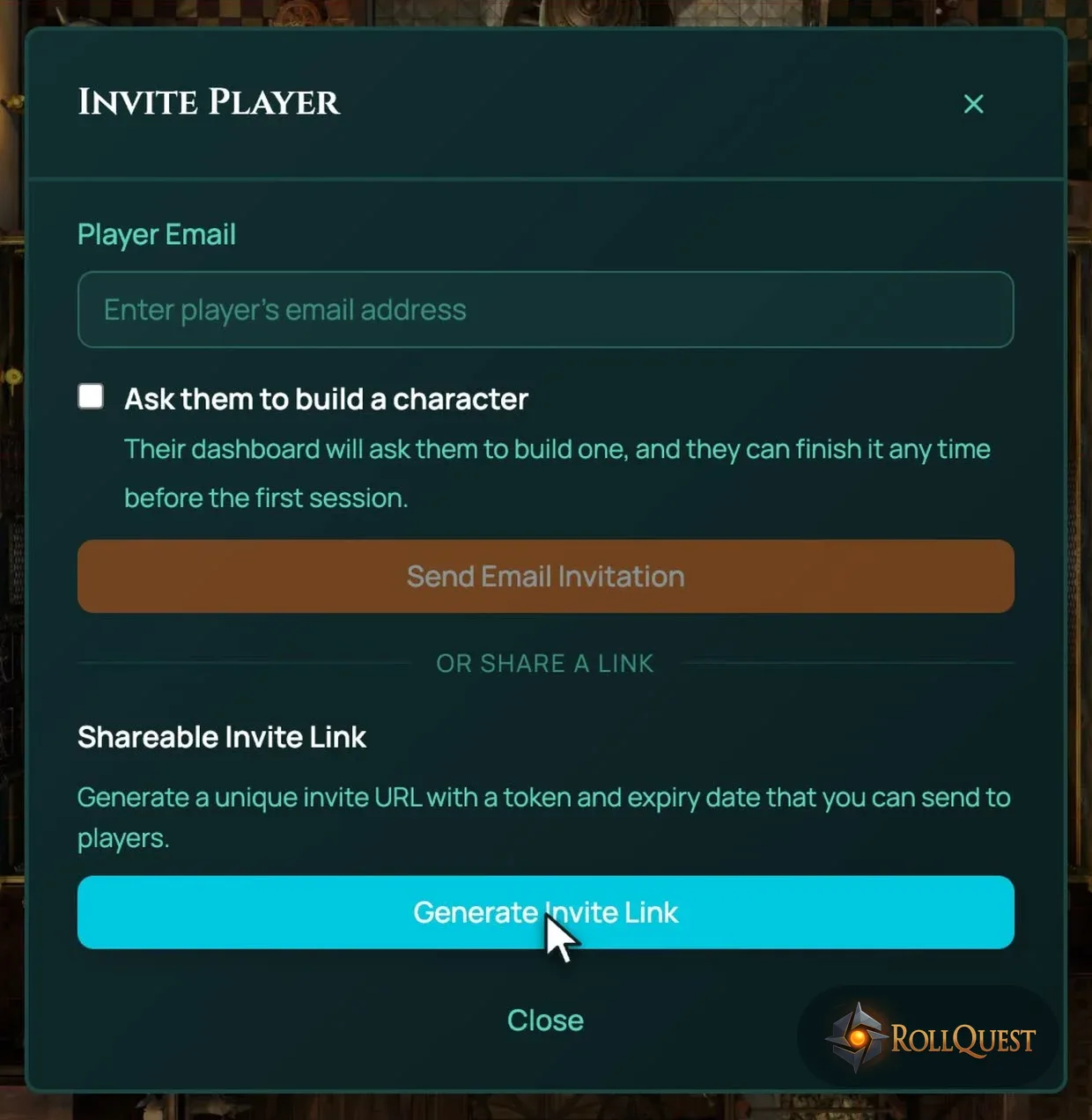
This is where we come in. RollQuest runs in Chrome or Edge, so there's no app for the strangers you just met to install: they make a free account and join from your invite. Fog of war, dynamic lighting with walls and doors, 3D dice, 5e and 5.5e character sheets, a combat tracker and audio are all on the free plan, and a game holds eight players plus the GM. Generate a share link and post it in the group's chat, or invite each player by email with "Ask them to build a character" ticked, and their dashboard asks them for a character before the first session.
Running a game online for the first time? How to run D&D online covers the rest: voice chat, characters and the first session.
Safety with strangers
Most group finders leave the vetting to you. Before you play with people you met on a board:
- Never pay a GM outside the platform you found them on. StartPlaying forbids it, and on a free board there's nobody to complain to if the GM disappears.
- Ask about safety tools. A GM who runs a session zero and uses lines and veils or the X-card has thought about the table as well as the plot.
- Keep personal details on the platform's messages until you've played a session or two.
- Leave a table that isn't fun for you. You owe strangers a polite message, not a campaign.
Frequently asked questions
Where can I find a D&D group online for free?
Groupfinder, Roll20's Looking for Group, r/lfg and the official D&D Discord are all free. Groupfinder matches you on how you like to play; Roll20's board only lists games on Roll20; r/lfg and Discord are open boards where you post or reply.
How much does a paid DM cost?
On StartPlaying, GMs set their own prices and the average is $15 to $20 a session, plus a small service fee at checkout. The GM keeps 85% after StartPlaying's 15%.
Is StartPlaying worth it?
For a first game, or a group that always falls apart over scheduling, often yes: GMs are reviewed, games have a fixed time, and a GM who doesn't turn up has to refund you. Refunds come as site credit, though, and a weekly game at $20 a session is $80 a month.
Is groupfinder.eu the same as groupfinder.gg?
Yes. Groupfinder moved to groupfinder.gg in July 2026, and groupfinder.eu now redirects there.
What's the best way to find a D&D group as a beginner?
D&D Beyond's group finder offers new players a $0.99 first session with a StartPlaying GM while the offer lasts. The free routes are the D&D Newbie Sessions Discord and the D&D Encounters nights at game stores, which the Wizards Store & Event Locator lists.
Can I play on RollQuest with a group I found on these sites?
Yes, with any of them except Roll20's board, which is only for games on Roll20. Send your players the invite link; they need Chrome or Edge and a free account.